

I Was Injured At Work In Michigan — What Should I Do? (2026 Update)
- | By Steele & Ferguson, P.C.
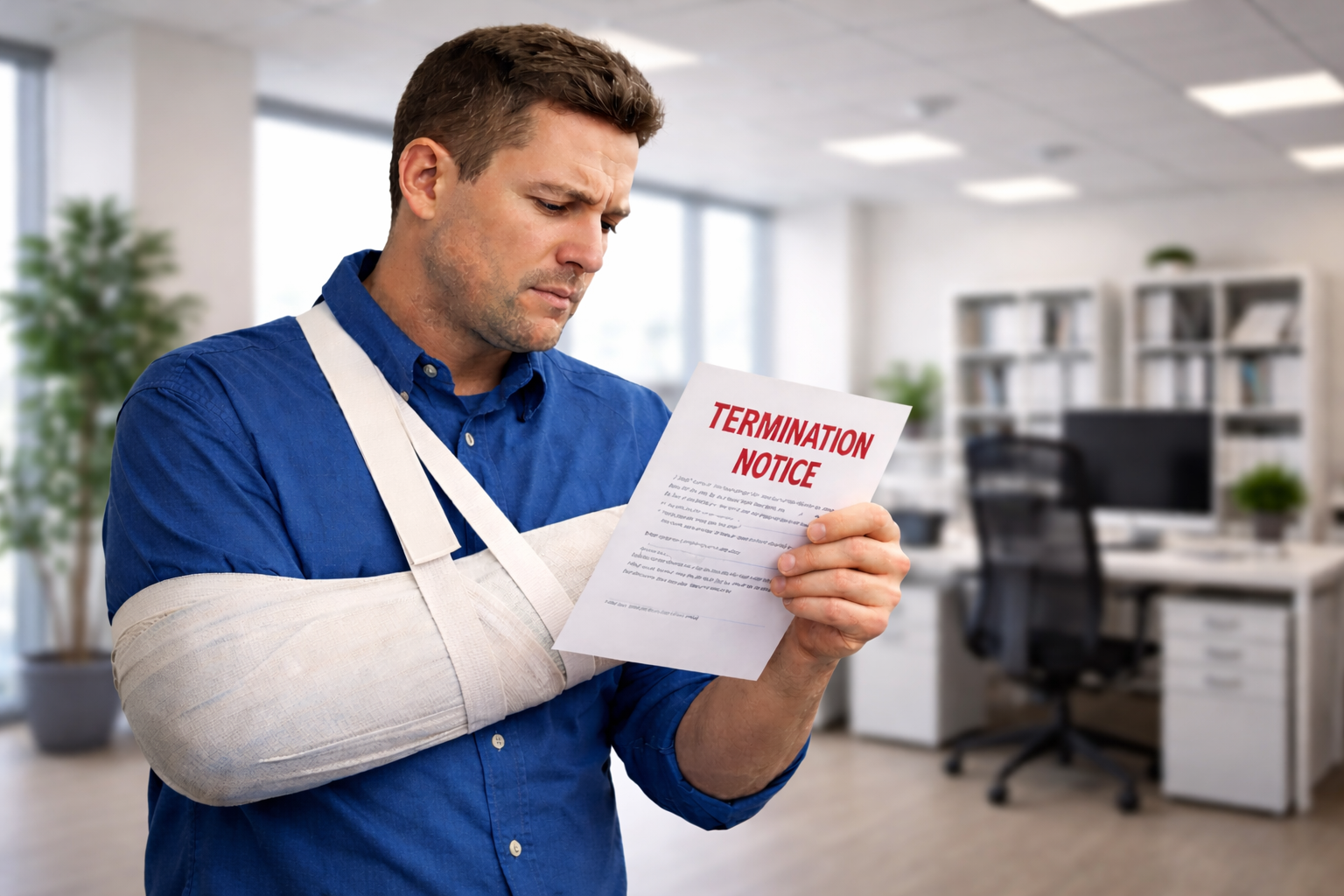
Yes, you can be fired while on workers’ comp in Michigan, but your employer cannot legally fire you because you filed a workers’ compensation claim or exercised your rights under Michigan’s workers’ compensation law. Michigan generally follows at-will employment, which means employers can usually end employment at any time unless the reason is illegal. Michigan law also specifically bars an employer from discharging or discriminating against an employee for filing a workers’ comp complaint or proceeding.
That means two things can be true at once: your employer may be allowed to terminate your job in some situations, but they are not allowed to punish you for reporting a work injury or pursuing benefits. If you were fired after getting hurt at work, the key question is why you were fired and whether the termination was really retaliation.
The Short Answer
If you are asking, “Can I be fired while on workers’ comp in Michigan?” the answer is:
- Yes, possibly
- No, not for filing a workers’ comp claim
- Maybe, if the employer says it had another legal reason
- You may still have a workers’ comp case even if you lose your job
Michigan workers’ compensation is a wage-loss system, and benefits may be claimed as long as disability and wage loss continue. But if an employee is terminated from “reasonable employment” for the employee’s fault, that can affect wage-loss entitlement.
What Michigan Law Actually Protects
Michigan law protects workers from retaliation for using their workers’ compensation rights. The Workers’ Disability Compensation Act says a person shall not discharge an employee or discriminate against an employee because the employee filed a complaint, instituted a proceeding, or exercised a right under the Act.
That protection matters because employers and insurance companies sometimes try to hide retaliation behind other excuses.
Examples of possible illegal retaliation
- Firing you right after you report a work injury
- Cutting your hours right after you file a claim
- Demoting you because you asked for benefits
- Harassing you for seeing the approved doctor
- Pressuring you not to report the injury
- Creating a fake paper trail after you file
Can My Employer Fire Me for Other Reasons?
Sometimes, yes.
Michigan is generally an at-will employment state. In a published Michigan Court of Appeals decision, the court stated that employment is usually terminable by either the employer or employee at any time, for any or no reason, but also recognized that an employer is not free to fire an at-will employee when the discharge contravenes public policy.
So an employer may claim it fired you for a reason unrelated to workers’ comp, such as:
- Layoffs
- Attendance issues unrelated to the injury
- Misconduct
- Violation of company policy
- Elimination of your position
- Inability to return to work after protected leave ends
But employers do not get a free pass just because they give a different reason. If the real reason was your injury claim, the firing may still be unlawful.
Workers’ Comp Does Not Automatically Mean Job Protection
This is where many injured workers get confused.
Workers’ comp pays medical care and wage-loss benefits if you qualify. It does not automatically guarantee that your exact job will be held forever. Michigan’s workers’ comp system is focused on injury benefits, not automatic permanent job protection. Michigan’s own worker materials explain that benefits may be claimed as long as disability and wage loss continue, which shows the claim itself can continue even when employment status changes.
That said, other laws may also protect you.
Other Laws That May Protect Your Job
FMLA may protect your position
If you work for a covered employer and you are an eligible employee, the federal Family and Medical Leave Act can provide up to 12 workweeks of unpaid, job-protected leave, continuation of group health benefits, and a right to return to the same or an equivalent job at the end of FMLA leave. Workers’ compensation leave and FMLA leave may also run at the same time when the absence qualifies.
Disability accommodation laws may matter too
If your work injury also qualifies as a disability, an employer may have to provide reasonable accommodation, including unpaid leave in some cases, absent undue hardship. The EEOC also explains that an employer may need to provide additional unpaid leave even if it has a no-fault leave policy.
What If I Cannot Return to My Old Job Yet?
That does not automatically mean your case is over.
Important issues include:
- Whether your doctor has you off work completely
- Whether your employer offered light duty or “reasonable employment”
- Whether the offered job actually fits your restrictions
- Whether you were fired for cause from that job
- Whether your wage loss continues because of the injury
Under Michigan law, if an employee is terminated from reasonable employment for the employee’s fault, the employee may be treated as having voluntarily removed themselves from that employment, which can affect wage-loss benefits. That is one reason injured workers should be very careful before refusing work or getting into a dispute at a light-duty job.
Signs You May Have Been Fired Because of Workers’ Comp
Watch for red flags like these:
- You were fired right after reporting the injury
- Your employer seemed angry that you filed a claim
- Supervisors made comments about your claim costing money
- You had a good record before the injury, then suddenly got written up
- The employer refused to work with your restrictions
- Other employees were treated better in similar situations
- The stated reason for firing makes no sense
- The company replaced you immediately after claiming there was no work
What To Do If You Were Fired While on Workers’ Comp in Michigan
If this happened to you, take these steps right away.
1. Save everything
Keep copies of:
- Termination letters
- Text messages
- Emails
- Write-ups
- Job descriptions
- Wage records
- Doctor restrictions
- Workers’ comp documents
2. Write down the timeline
Make a simple timeline showing:
- Date of injury
- Date you reported it
- Date you filed for workers’ comp
- Dates of medical treatment
- Dates of light-duty offers
- Dates of write-ups or warnings
- Date you were fired
3. Do not assume you lost your claim
Being fired does not automatically destroy a valid workers’ comp case. Michigan worker guidance explains that benefits may be claimed as long as disability and wage loss continue, although the facts around post-injury employment and termination can affect wage-loss issues.
4. Talk to a workers’ comp lawyer fast
The sooner your case is reviewed, the better. Delay helps the employer. Early legal action can help preserve evidence, build the timeline, and expose retaliation.
Can I Still Get Workers’ Comp Benefits If I Was Fired?
In many cases, yes.
Your right to workers’ comp benefits depends on the facts of your injury, disability, wage loss, medical proof, work restrictions, and what happened with any light-duty or reasonable employment offer. Michigan worker guidance states that benefits may be claimed as long as disability and wage loss continue. But if you were terminated from reasonable employment for fault, that can complicate or reduce wage-loss entitlement.
Benefits that may still be at issue
- Medical treatment
- Wage-loss benefits
- Mileage reimbursement
- Vocational issues
- Ongoing disability disputes
- Light-duty disputes
- Closed period benefits
- Penalties or late payment issues in some cases
What Employers Often Argue
Employers and insurers often say:
- “We didn’t fire you because of workers’ comp.”
- “You were let go for attendance.”
- “You violated policy.”
- “There was no work available.”
- “You could have returned but chose not to.”
- “You were fired from light duty for cause.”
That is exactly why these cases must be built carefully. The timeline, medical restrictions, company communications, and treatment of other employees can make all the difference.
Why Choose Steele Law for Your Michigan Workers’ Comp Case?
At Steele Law, we know what injured workers are up against.
When you get hurt on the job, everything can change fast:
- Your paycheck drops
- Your medical care becomes a fight
- Your employer stops acting like you matter
- The insurance company starts looking for ways to cut exposure
- Your job suddenly feels at risk
That is where we come in.
We fight for Michigan workers who have been injured, pushed around, denied benefits, forced into bad light-duty situations, or fired after doing the right thing.
Why injured workers choose Steele Law
- We know Michigan workers’ comp law
- We know the pressure tactics employers use
- We know how to challenge bad denials
- We know how to build strong wage-loss claims
- We know how to expose retaliation facts
- We keep the process clear, direct, and aggressive
You should not have to guess whether your employer crossed the line. We help you find out, and we fight back.
FAQs
Can I be fired just for filing a workers’ comp claim in Michigan?
No. Michigan workers’ comp law prohibits discharging or discriminating against an employee because the employee filed a complaint, started a proceeding, or exercised a right under the Act.
Can I still be fired while I am out of work on workers’ comp?
Yes, it can happen. Michigan generally follows at-will employment, but the firing cannot be for an illegal retaliatory reason. Separate laws like FMLA or disability accommodation law may also matter depending on the facts.
Does being fired end my workers’ comp case?
Not automatically. Michigan worker guidance states that benefits may be claimed as long as disability and wage loss continue, although your post-injury job status and any light-duty termination issues can affect wage-loss benefits.
What if my employer offered light duty and then fired me?
That can be a major issue. Michigan law says if an employee is terminated from reasonable employment for fault, that may affect wage-loss entitlement. Whether the job was truly reasonable and whether the firing was really for fault are fact-heavy questions.
Do I get my job back after workers’ comp?
Not automatically under workers’ comp law alone. But if you qualify for FMLA, you may have a right to return to the same or an equivalent job after protected leave. Disability accommodation law may also require additional leave or other accommodation in some situations.
What should I do right after I am fired?
Save your documents, avoid signing anything without legal advice, keep treating, and speak with a Michigan workers’ comp lawyer immediately.
Call Steele Law Right Now For Help
If you are asking, “Can I be fired while on workers’ comp in Michigan?” the answer is yes, but your employer cannot legally fire you for filing a claim or using your rights under the law. That distinction matters, and it can make or break your case.
Do not let an employer hide retaliation behind paperwork, policy language, or excuses.
If you were hurt at work in Michigan and then fired, pushed out, cut off, or threatened, call Steele Law now at 248-704-2542. We will review the facts, explain your rights, and fight for the benefits and protection you deserve.