

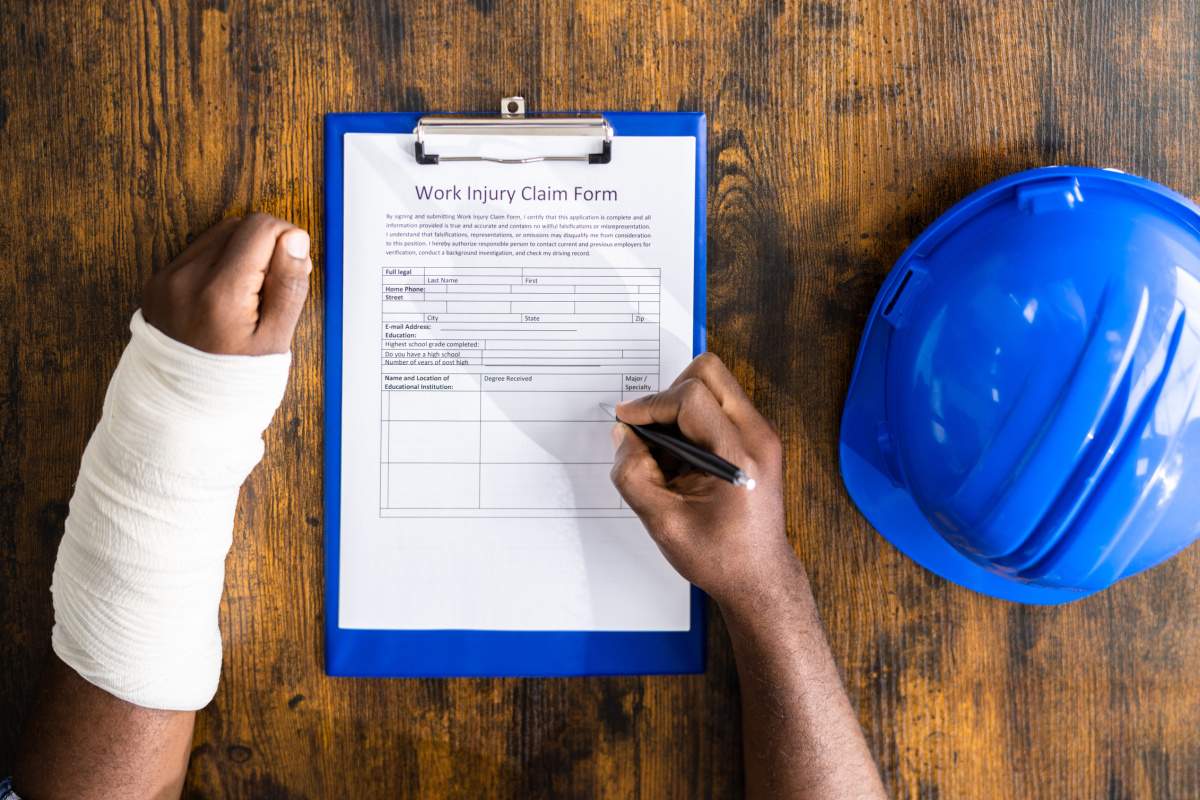
The odds of winning a workers’ comp case in Michigan in 2026 depend on whether your injury is work-related, how strong your medical evidence is, whether you reported the injury properly, and whether the insurance company is disputing your claim. Steele Law helps injured workers across Michigan understand their chances, build stronger evidence, deal with denied or delayed claims, and fight for the workers’ compensation benefits they may be owed.
The Short Answer
Most workers’ comp claims that are properly filed and supported with medical evidence are approved. But “most” isn’t all. Denials happen constantly — and when they do, the odds of winning on appeal depend heavily on whether you have an experienced attorney in your corner. The single biggest factor that determines whether you win or lose isn’t the strength of your injury. It’s how well your case is built and who is fighting for you.
📞 Don’t guess about your odds. Get a straight answer from a Michigan workers’ comp attorney — free. Call Steele Law: 248-704-2542
First — What Does “Winning” Actually Mean in Workers’ Comp?
Before we talk odds, let’s define winning — because workers’ comp isn’t a single event. It’s a process with multiple stages, and winning can mean different things at each one.
A successful claim at the initial stage means your benefits are approved and begin — including medical coverage, wage replacement, and disability payments.
After a denial, success means appealing the insurance company’s decision and getting your benefits reinstated or awarded.
At a hearing, it means a magistrate rules in your favor after the insurance company disputes your claim.
In a settlement, it means negotiating a lump sum that fairly compensates you for your injury, lost wages, and future medical needs.
You can win at every stage, lose at one and win later, or settle before it ever reaches a hearing. Understanding where you are in that process changes what “winning” looks like for you.
What the Numbers Say
Hard statewide data on Michigan workers’ comp outcomes is not publicly reported in a single clean statistic. But here’s what we know from industry data, legal experience, and claims trends:
Initial claim approval rates for clearly documented, promptly reported, medically supported workplace injuries run well above 50% — many estimates place routine claim approvals in the 70–80% range nationally when filed correctly.
Denial rates rise sharply for claims with delayed reporting, pre-existing conditions, injuries with no witnesses, or cases where the worker didn’t seek immediate medical attention.
Appeals success rates for denied claims represented by an attorney are significantly higher than for workers representing themselves. Studies consistently show that represented workers receive higher benefit amounts and better outcomes at hearings than unrepresented workers — often by a margin that far exceeds the attorney’s fee.
Settlement rates are high. The majority of disputed Michigan workers’ comp cases settle before reaching a full hearing. That’s not a sign of weakness — a good settlement can be a very strong outcome.
The bottom line: your odds are not fixed. They are directly shaped by what you do from the moment of your injury forward.
What Increases Your Odds of Winning
These are the factors that most consistently lead to successful workers’ comp outcomes in Michigan.
You reported the injury immediately. Michigan requires you to report a workplace injury to your employer within 90 days. Workers who report on the day of the injury — or within the first few days — have substantially stronger claims than those who wait. Delayed reporting gives insurance companies their favorite argument: if it was really that serious, why didn’t you say something sooner?
You sought medical attention right away. A gap between your injury and your first medical visit is a gap the insurance company will exploit. They will argue your injury happened somewhere else, that it isn’t work-related, or that it isn’t serious enough to warrant benefits. Same-day or next-day medical documentation is one of the most powerful things you can have in your file.
Your doctor clearly connects the injury to your job. Workers’ comp claims live and die on medical evidence. The physician treating you needs to explicitly state — in writing, in your medical records — that your injury or condition is work-related. A diagnosis alone isn’t enough. The causal connection to your job must be documented clearly and consistently.
There were witnesses. If a coworker, supervisor, or anyone else saw what happened, get their name and contact information. Witness accounts that corroborate your version of events significantly strengthen your credibility and close off one of the insurance company’s most common lines of attack.
You hired an attorney early. This is the single most consistent predictor of a better outcome. Workers who retain experienced Michigan workers’ comp attorneys before accepting or appealing anything receive higher benefit amounts, have fewer claims improperly denied, and negotiate better settlements. The insurance company has professionals on their side from day one. You should too.
You followed your doctor’s treatment plan. Missing appointments, skipping prescribed therapy, or ignoring medical advice hands the insurance company a reason to argue that you aren’t really injured — or that you’re not cooperating with treatment, which can be used to reduce or terminate your benefits.
You didn’t give a recorded statement without legal advice. Insurance adjusters are trained to ask questions in ways that produce answers that minimize your claim. A recorded statement made without an attorney present can and will be used against you.
What Decreases Your Odds of Winning
These are the patterns that most reliably lead to denied claims and lost hearings.
Delayed reporting. Waiting weeks or months to report your injury — even if you had a reason — creates suspicion. Insurance companies treat delayed reports as a credibility issue, and magistrates sometimes do too.
No medical documentation or gaps in treatment. If there’s no medical record connecting your injury to your job, there’s no case. It’s that simple. Gaps in treatment also create the argument that you must have recovered or that something else caused your current condition.
Pre-existing conditions that weren’t properly handled. Having a prior injury or condition in the same area of your body doesn’t disqualify you — Michigan law recognizes that work injuries can aggravate pre-existing conditions. But you need a physician who understands how to document the aggravation properly. Without that, the insurance company will blame everything on your prior condition.
Inconsistency in your account of the injury. If what you told your employer, what you told your doctor, and what you told the insurance company don’t align exactly, that inconsistency becomes ammunition. Be precise, consistent, and accurate every single time you describe what happened.
Social media posts that contradict your claim. Insurance companies monitor social media. If you’re claiming a serious back injury and you post photos of yourself helping a friend move furniture, expect that to appear in your file. Adjust your social media accordingly during a pending claim.
Handling the appeal alone. The workers’ comp appeals process in Michigan involves formal hearings before magistrates, rules of evidence, legal arguments, and medical testimony. Workers who represent themselves at these hearings are at a severe disadvantage against insurance company attorneys who do this every day.
What Happens When a Claim Gets Denied
A denial is not the end. It is the beginning of a different fight — one that many workers win.
When a Michigan workers’ comp claim is denied, you have the right to appeal to the Michigan Workers’ Compensation Agency. The appeal process involves a hearing before a magistrate where both sides present evidence and arguments. The magistrate then issues a decision.
If you lose at the magistrate level, appeals can go to the Workers’ Compensation Appellate Commission and ultimately to the Michigan Court of Appeals.
The reality is that many denied claims are valid claims that were denied because the insurance company was betting the worker wouldn’t fight back, wouldn’t know how to fight back, or would accept the denial and walk away.
Don’t walk away.
Workers represented by attorneys at appeal hearings win at dramatically higher rates than those who go it alone. The appeal is often where the real fight is — and it’s a fight worth having.
📞 Your claim was denied. Don’t accept it. Call Steele Law today — free consultation. 248-704-2542
The Role of Independent Medical Exams — And Why They’re Dangerous
When you file a workers’ comp claim in Michigan, the insurance company has the right to send you to a doctor of their choosing for an Independent Medical Exam — called an IME.
Here’s what you need to understand: there is nothing independent about an IME. These are doctors who are paid by insurance companies to evaluate injured workers. Their reports consistently minimize injuries, question diagnoses, and provide the insurance company with the medical cover they need to deny or reduce claims.
An IME report that contradicts your treating physician’s findings is one of the most common reasons workers’ comp claims are disputed or denied.
What you can do about it:
- Know that you are required to attend — refusing to go can jeopardize your claim
- Bring someone with you to witness what is said
- Be accurate and do not minimize or exaggerate your symptoms
- Have your own attorney-retained medical expert ready to counter the IME findings if necessary
- Make sure your treating physician’s documentation is thorough and detailed before the IME happens
An experienced workers’ comp attorney knows how to handle IMEs and how to challenge IME reports that are designed to sink your claim.
Pre-Existing Conditions: What They Mean for Your Odds
One of the most common reasons insurance companies deny or reduce workers’ comp claims in Michigan is the presence of a pre-existing condition.
You have a history of back problems. You’ve had a prior knee surgery. You were treated for carpal tunnel years ago. The insurance company’s argument: your current symptoms are from your old condition, not your work injury.
Here’s what Michigan law actually says: you are entitled to workers’ comp benefits if your work aggravated, accelerated, or combined with a pre-existing condition to produce your current disability. You do not have to be perfectly healthy before your injury to have a valid claim.
The key is medical documentation that clearly establishes your work injury as a contributing cause — not just a coincidence that happened alongside a pre-existing condition.
This is exactly the kind of nuanced medical and legal argument that requires an experienced attorney. Insurance companies are aggressive on pre-existing condition denials because they know unrepresented workers often accept them without challenge.
Don’t accept it.
Does the Type of Injury Affect Your Odds?
Yes — and it’s worth understanding how.
Traumatic injuries — a fall, a crush injury, an acute accident with a clear cause and immediate symptoms — tend to have higher approval rates. The mechanism of injury is obvious. The connection to work is clear. Medical documentation is straightforward.
Repetitive stress injuries — carpal tunnel, tendinitis, back injuries that developed gradually over time — are more frequently disputed. The insurance company argues the condition is degenerative, age-related, or caused by activities outside of work. These cases require strong medical documentation and often benefit significantly from legal representation.
Occupational diseases — hearing loss, respiratory conditions, chemical exposure illnesses — can be highly complex. Causation is harder to establish, latency periods are long, and insurance companies fight these aggressively. An attorney is almost always necessary.
Mental health injuries — anxiety, PTSD, depression resulting from workplace events — face the highest hurdles. Michigan law does cover psychological injuries in certain circumstances, but the standards are demanding and the insurance company resistance is fierce.
No injury type is impossible to win. But the more complex the causation, the more critical experienced legal representation becomes.
Settlements: What Are the Odds of Getting a Fair One?
Most workers’ comp disputes in Michigan resolve through settlement rather than a full hearing. That’s generally a good thing — settlements provide certainty and often result in a lump sum that the worker can use immediately.
But here’s the risk: insurance companies make settlement offers designed to close cases cheaply. Many injured workers, exhausted and financially stressed, accept the first offer they receive — which is almost never the best offer available.
A fair settlement accounts for:
- Your current medical needs and ongoing treatment costs
- Your future medical needs for the rest of your life
- Your lost wages — past and projected future
- Your disability rating and its impact on your earning capacity
- The strength of your legal case and what you could win at a hearing
An experienced attorney negotiates settlements from a position of strength — because the insurance company knows that if you have a good lawyer, going to a hearing is a real risk for them.
Workers with attorneys consistently negotiate higher settlements than those without. The difference often far exceeds the attorney’s contingency fee, meaning represented workers net more money even after legal fees.
Steps to Maximize Your Odds Starting Today
If your injury is recent or your claim is pending, here’s what to do right now:
- Report in writing to your employer today if you haven’t already — get a copy of whatever you submit
- See a doctor immediately and make sure your medical records clearly state your injury is work-related
- Document everything — photos, written accounts, witness names, all medical visits and expenses
- Do not give a recorded statement to the insurance company before speaking with an attorney
- Do not sign any forms or settlement documents until an attorney has reviewed them
- Do not post about your injury or activity level on social media
- Call an attorney before your claim is disputed — the earlier you get legal guidance, the better your position
Frequently Asked Questions
What percentage of workers’ comp claims are approved in Michigan? There is no single published statewide figure, but properly documented claims filed promptly have strong approval rates. The key variables are documentation quality, medical evidence, and timely reporting. Disputed claims resolved with attorney representation have significantly better outcomes.
What are the most common reasons workers’ comp claims are denied in Michigan? The most common reasons are: delayed reporting, lack of medical documentation connecting the injury to work, pre-existing conditions, missed deadlines, inconsistencies in the worker’s account of the injury, and failure to attend required medical exams.
If my claim was denied, should I appeal? In most cases, yes. Many denied claims are valid claims that were denied because the insurance company expected the worker to give up. An attorney can evaluate whether your denial was proper and advise you on the strength of an appeal.
Does having an attorney really make a difference? Consistently, yes. Represented workers receive higher benefit amounts, win more appeals, and negotiate larger settlements. Workers’ comp law is complex, and the insurance company has professionals fighting for their side from the start.
What if I can’t afford an attorney? At Steele Law, you pay nothing upfront. We work on contingency — our fee comes out of your settlement or award, only if we win. There is no cost to call, no cost for the consultation, and no out-of-pocket expense during your case.
How long does a workers’ comp case take in Michigan? Straightforward claims can resolve in weeks to a few months. Disputed claims that go to hearing can take one to two years or longer. Settlements can happen at any point in the process. An attorney can often accelerate resolution by applying strategic pressure on the insurance company.
Can I reopen my case if my condition gets worse? In some circumstances, yes. Michigan law allows for modification of awards when a worker’s condition materially changes. Do not close your case or sign a final settlement without fully understanding the long-term implications for your health and earning capacity.
What if my employer says I wasn’t really hurt at work? Your employer’s opinion does not determine the outcome of your workers’ comp claim. That’s decided by the evidence — medical records, witness accounts, and legal argument. If your employer is disputing your claim, it is a strong signal that you need an attorney immediately.
The Bottom Line on Your Odds
Your odds of winning a workers’ comp case in Michigan are not set in stone. They are not determined by the severity of your injury alone or by whether the insurance company thinks your claim is valid.
They are determined by the quality of your documentation, the timeliness of your actions, the strength of your medical evidence, and — more than anything else — whether you have an experienced attorney building and fighting your case.
Workers who do everything right and have strong legal representation win. Workers who go it alone against insurance company professionals often don’t — even when their injury is real and their claim is legitimate.
You deserve to be in the first group.
Talk to Steele Law — Free Consultation, No Fees Unless We Win
At Steele Law, we represent injured Michigan workers at every stage — from initial claims to denials, appeals, hearings, and settlements. We know how insurance companies operate, we know how to counter their tactics, and we fight to make sure our clients receive every dollar they’re entitled to under Michigan law.
The consultation is completely free. If we take your case, you pay nothing unless we win. There is no risk to making the call.
📞 248-704-2542
Available days, evenings, and weekends. The sooner you call, the stronger your case.
Steele Law — Michigan Workers’ Compensation Attorneys Serving injured workers throughout Michigan